A design system your product team can use
We help product teams turn recurring interface patterns into a design system they can use and maintain. We review the current product and library, define components and behavior, and plan adoption with the designers and engineers responsible for the next release.
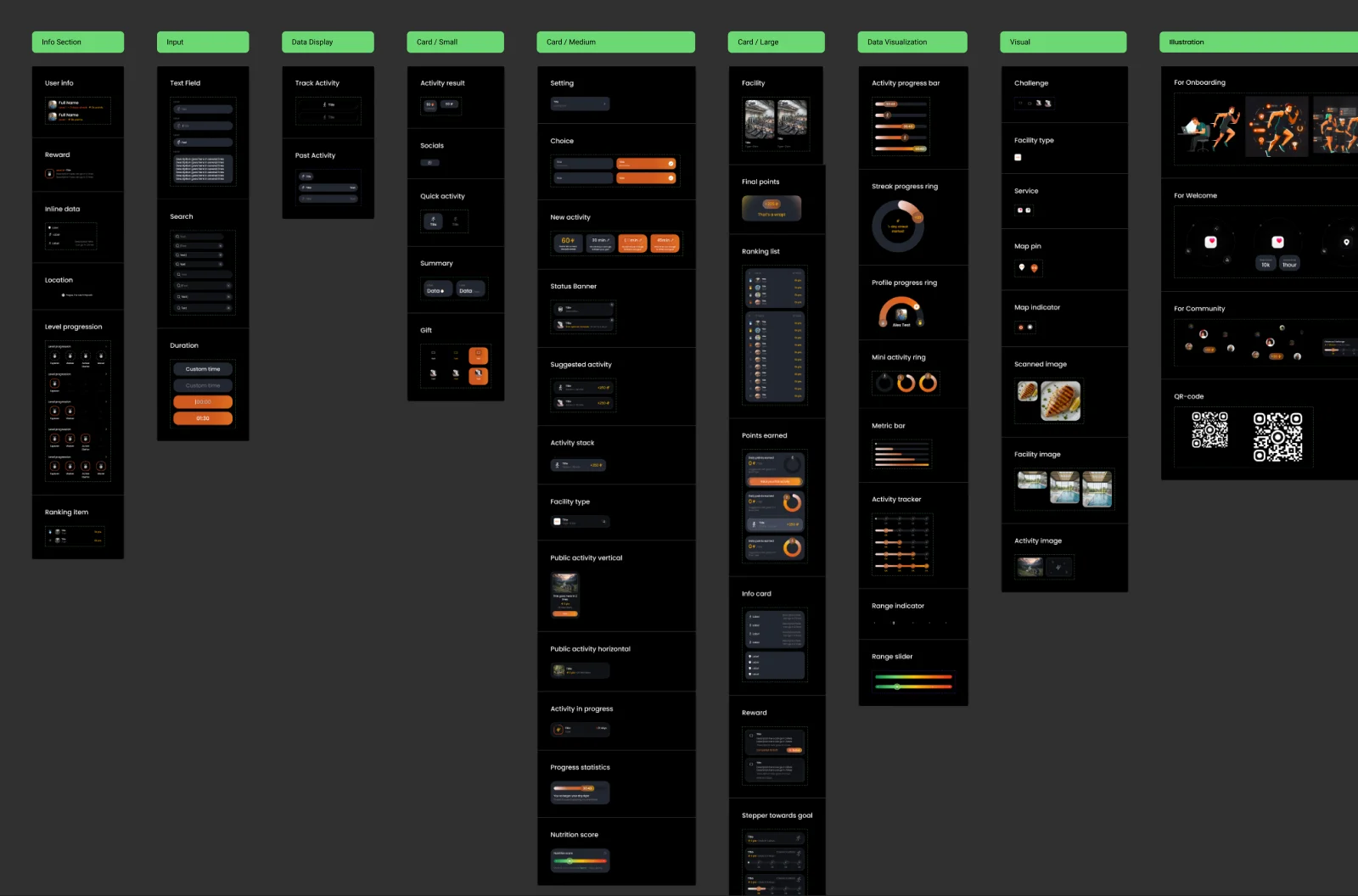
Build around the product you have
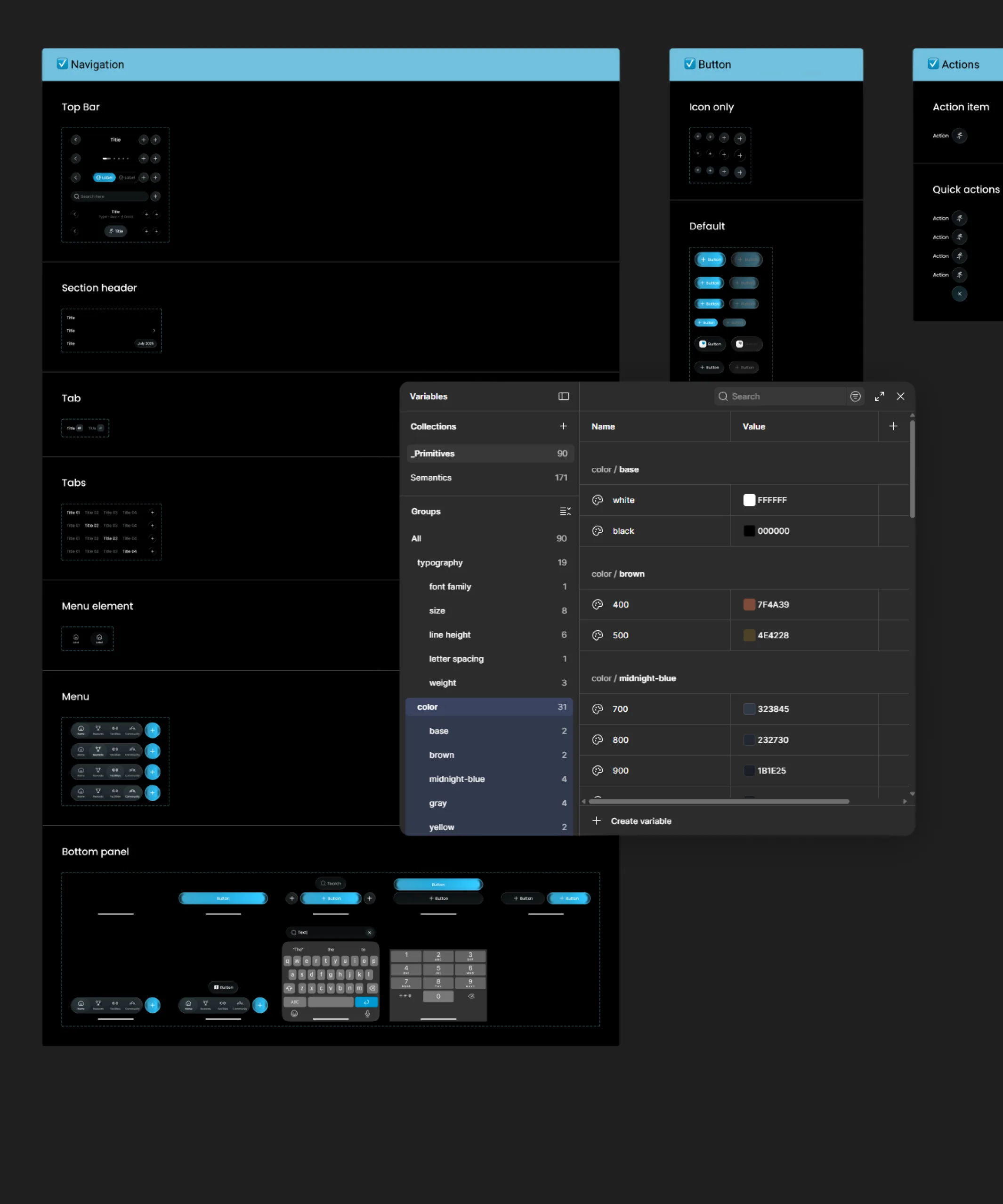
The parts of a usable system
How we build the first release
Compare screens and library
Review representative product screens, existing files, platform constraints, and the component library used by engineering.
Prioritize the patterns
Agree on what to reuse or change and which missing components the next release needs.
Document and test examples
Define behavior and show components together on real product screens. Review the results with the adopting team.
Support the handoff
Prepare specifications and agree on ownership. Coded components or implementation review need an explicit scope.
Choose the system work
Scroll horizontally to compare all columns.
| Starting point | What we examine | First useful outcome |
|---|---|---|
| An existing library is inconsistent | Live screens and duplicate components | An inventory and cleanup priorities |
| Several products need shared patterns | Representative screens and platform differences | Agreed foundations and component boundaries |
| A new system is ready for adoption | The next release and engineering library | An implementation area and ownership plan |
Questions?
Do you extend an existing system or replace it?
We review it first. Components already used in the product may be worth keeping. The inventory helps determine whether the work is an extension, a cleanup, or a broader rebuild of the foundations.
Does the engagement include coded components?
It can, if implementation is included in the agreed scope. Otherwise, we prepare design specifications for your engineers. We establish the framework, component ownership, and expected handoff before work begins.
Can the system support multiple products or themes?
We can plan for the products and themes you specify. Their differences affect token structure and component behavior, so we review representative screens before proposing a shared foundation or separate patterns.
What determines the first release?
The product’s recurring patterns and the next implementation milestone guide the priority. We agree on a component set, documentation depth, and adoption plan rather than setting a component count before examining the interface.
Explore related services


Last updated