Healthtech design for clinicians, patients, and insurers.
Clinician tools, patient apps, medical device software, and insurance platforms — we have shipped all four. We also published a UX audit of 30+ healthcare platforms and a conversion study across 30+ healthtech platforms.
49 people · Prague and Dubai · 4.9 on Clutch

Why healthtech companies choose Humbleteam
In healthtech, the interface is part of the care. A confusing screen can mean a missed dose.
So we design the failure states before the marketing screens.
Types of healthtech products we design
From the first clickable prototype to a product used in a clinic every day.
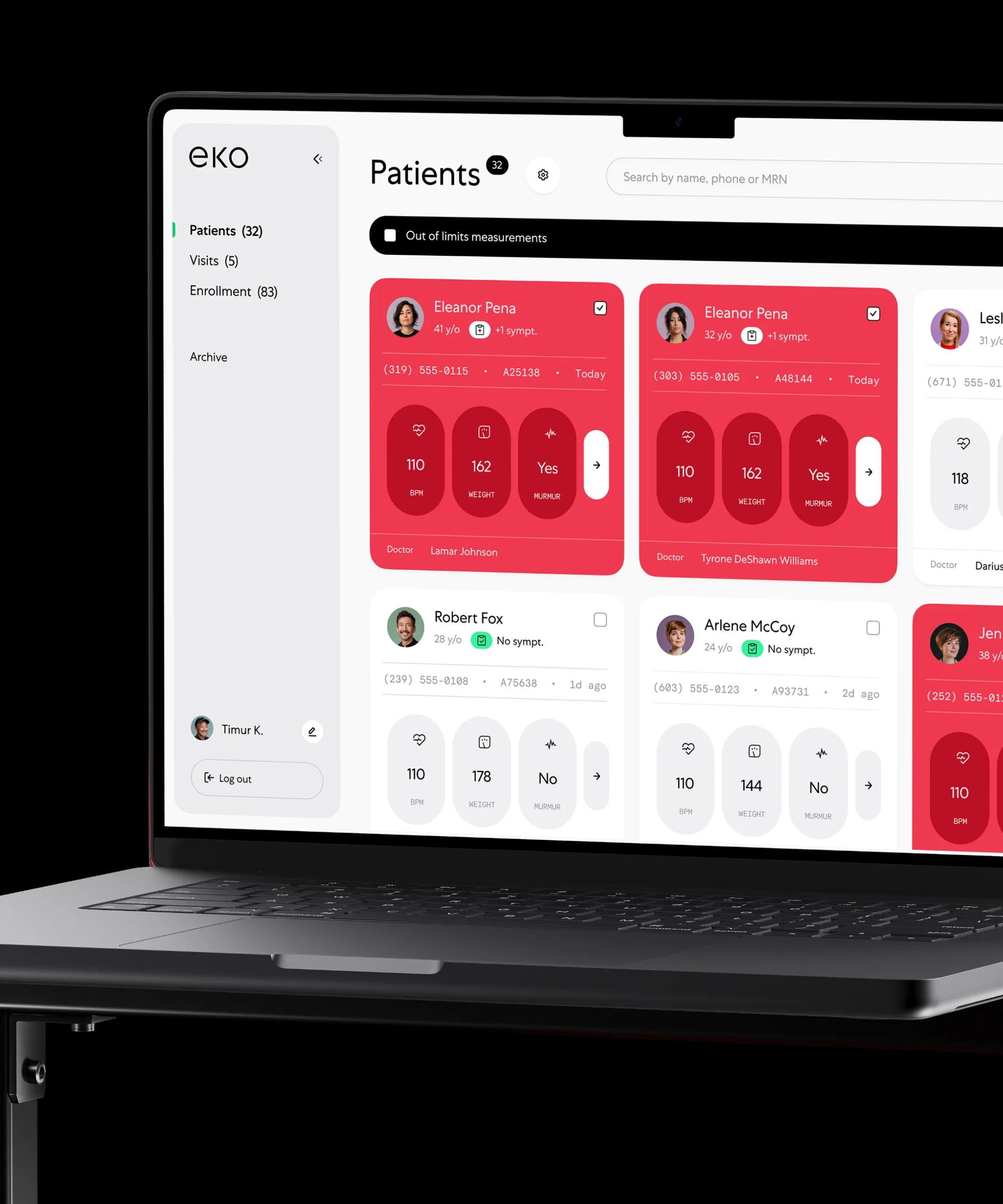
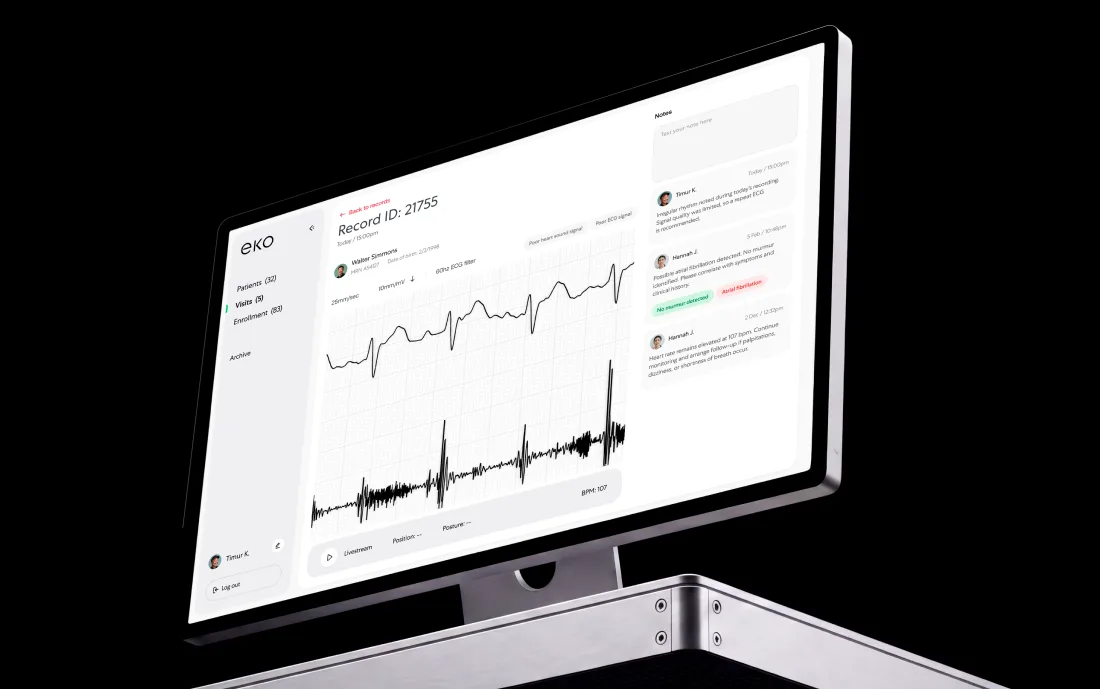
- 01Clinician toolsWorklists, patient panels, and case views built for a 9-minute appointment.
- 02Patient appsOnboarding, adherence, results in plain language, and escalation when it matters.
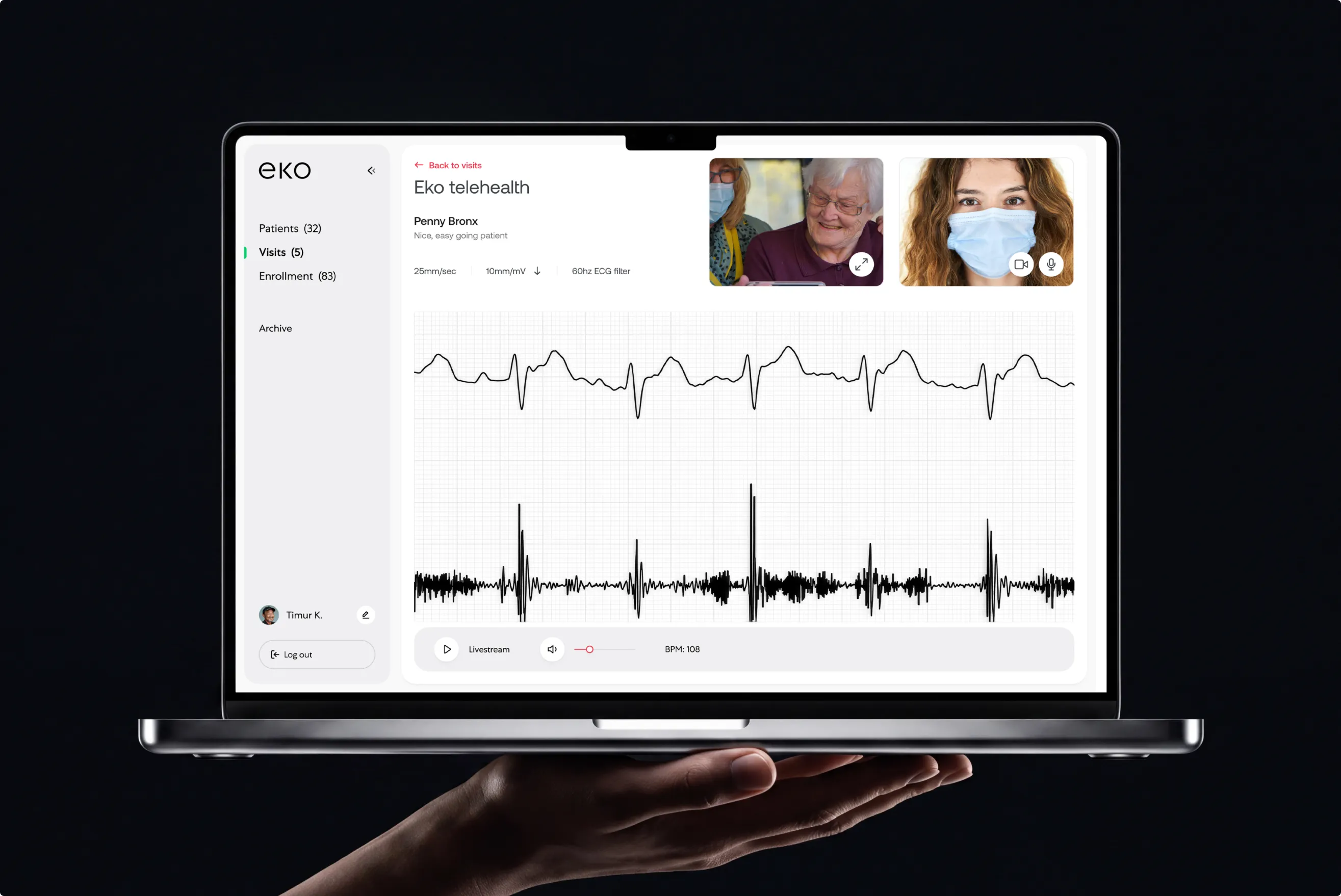
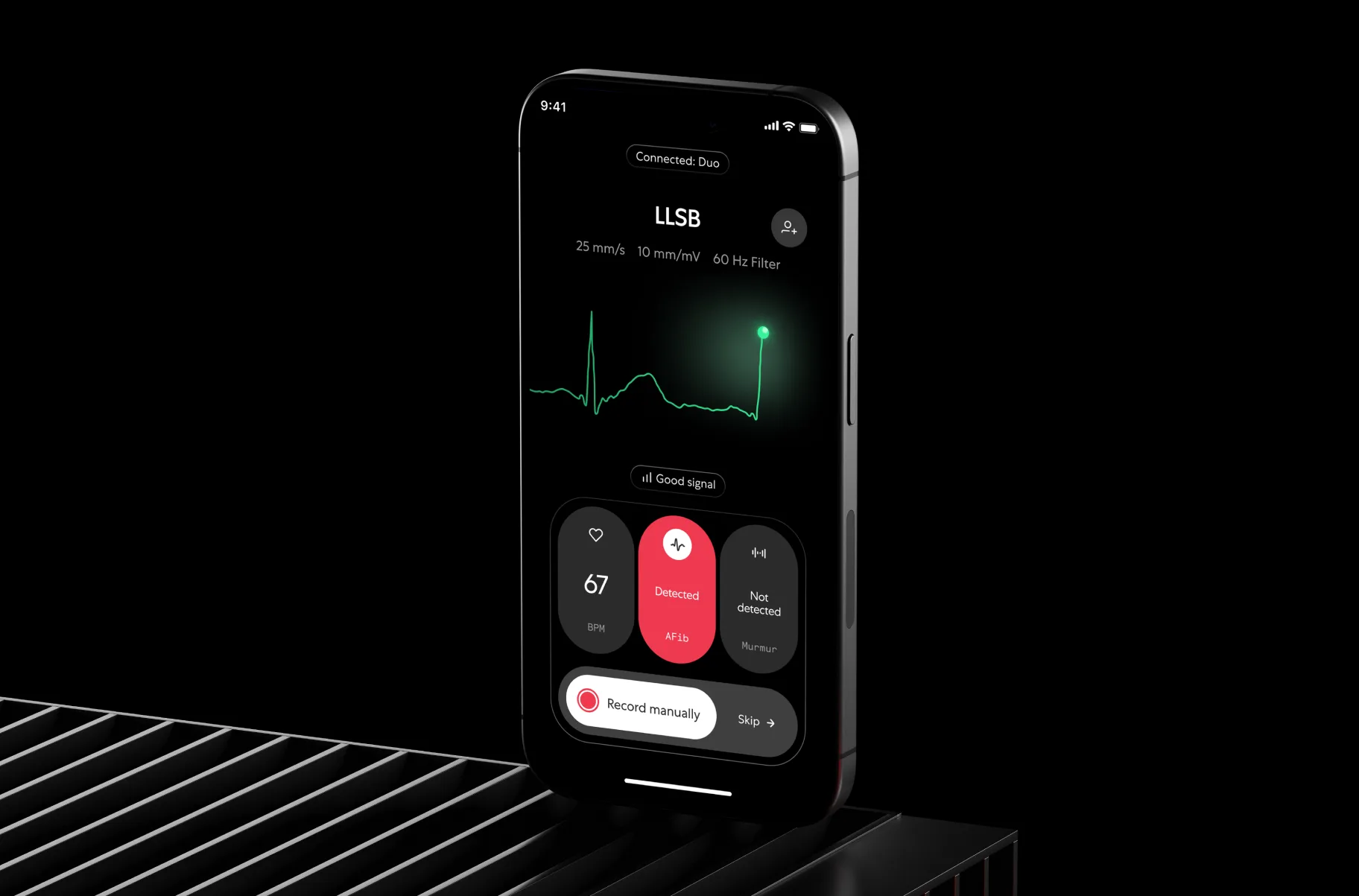
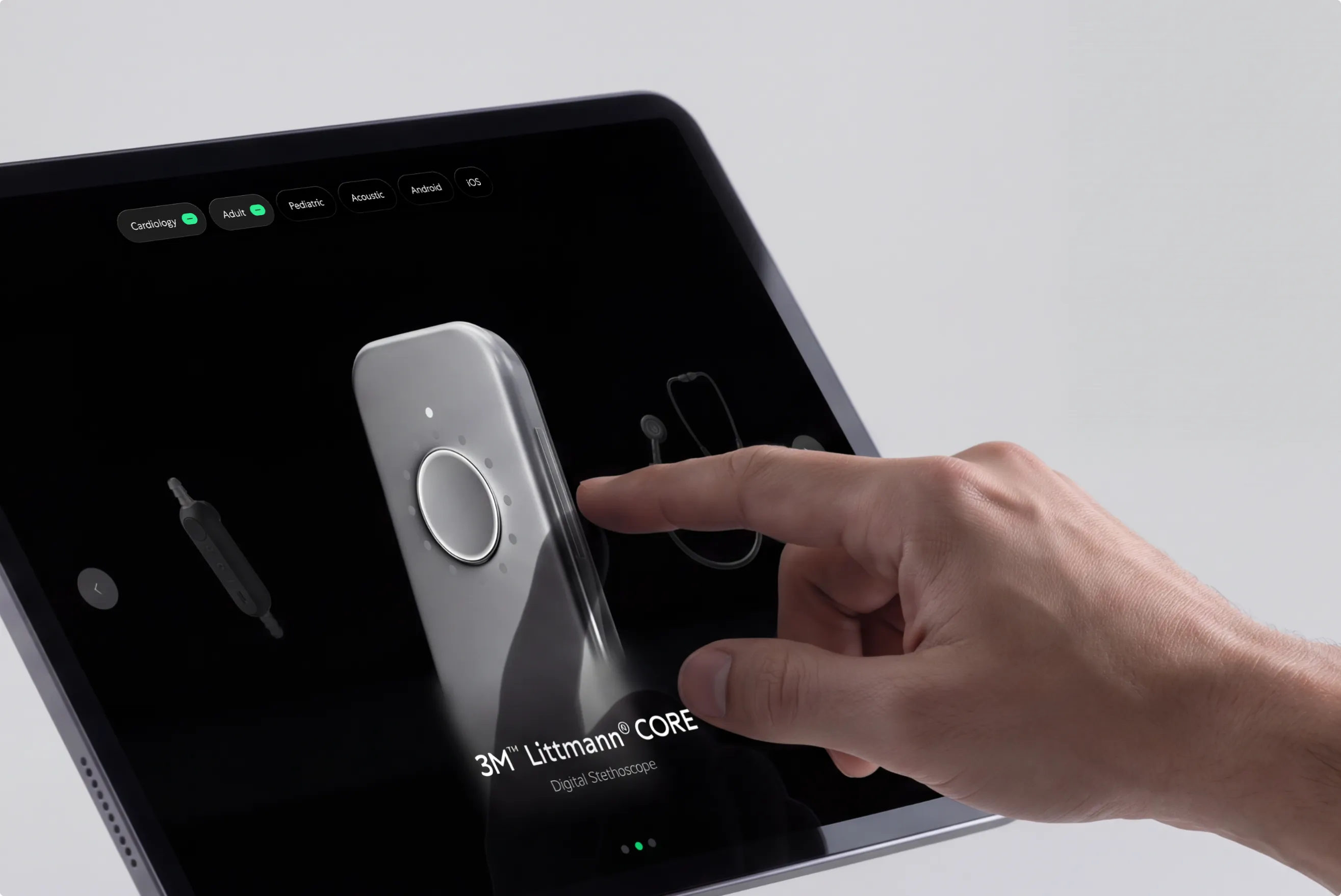
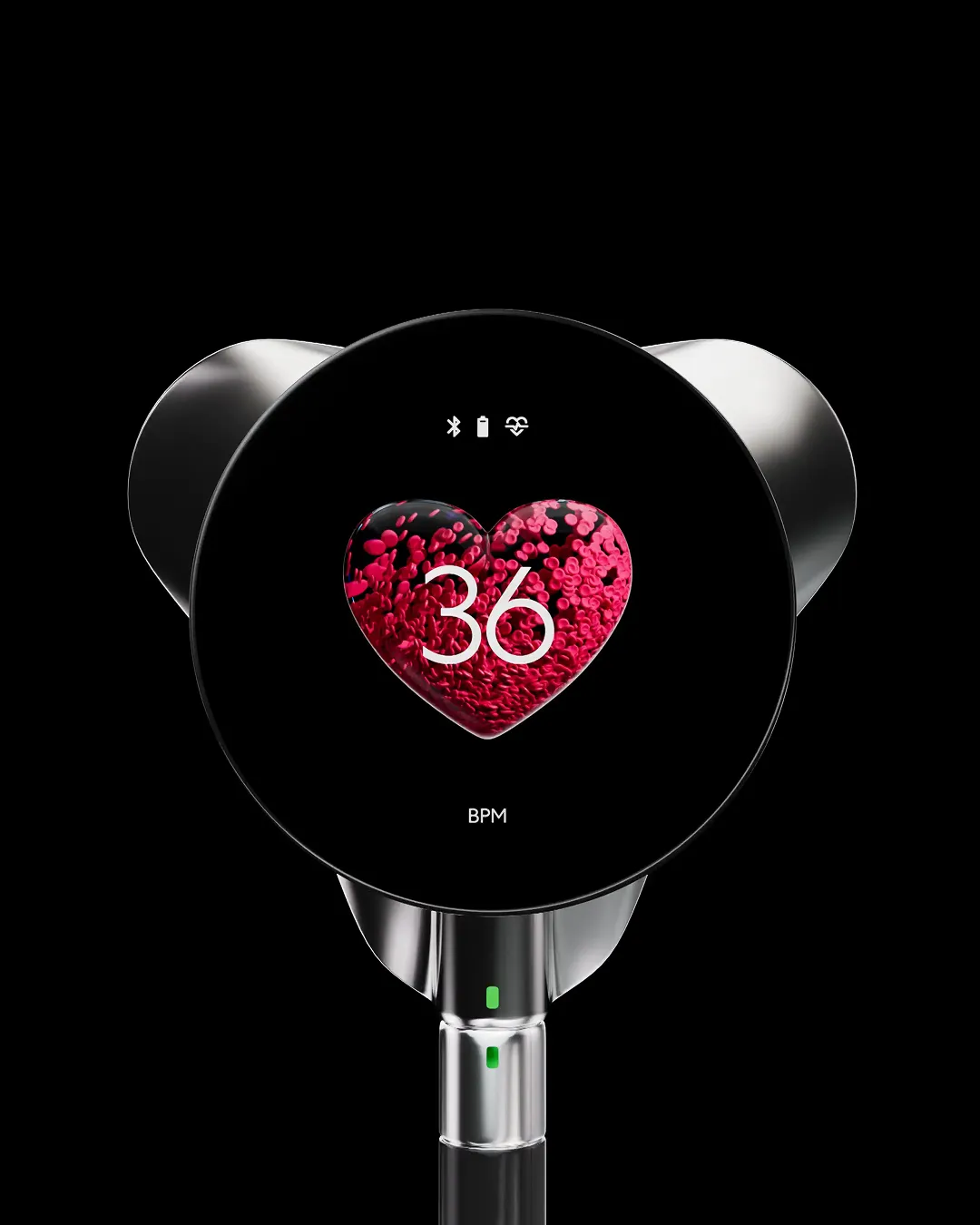
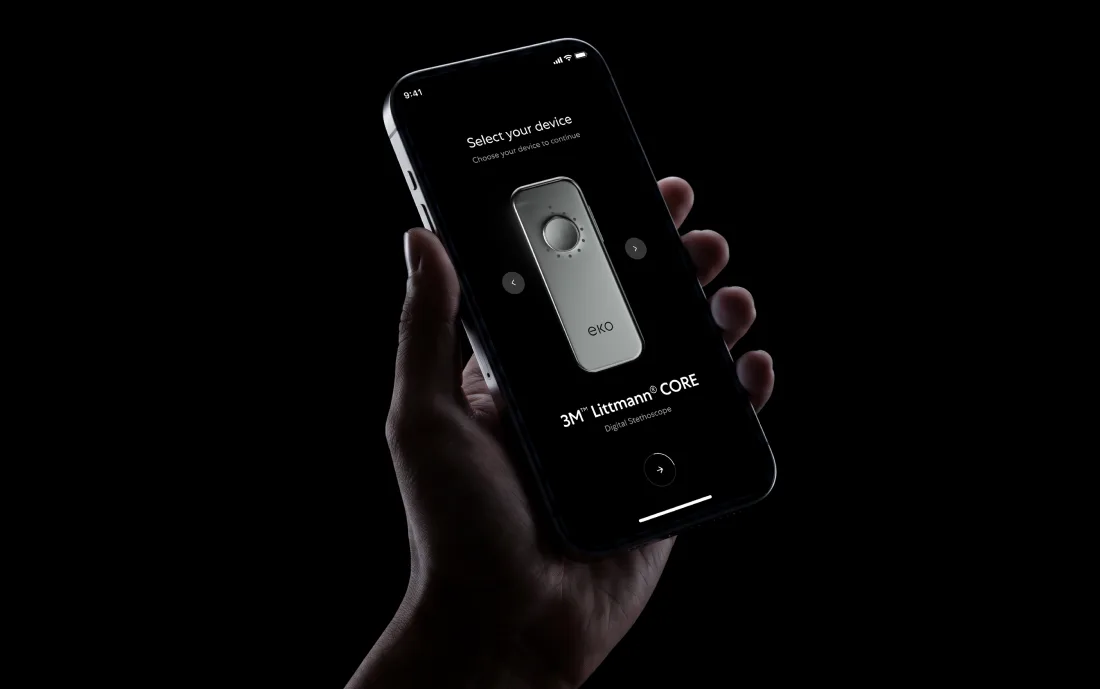
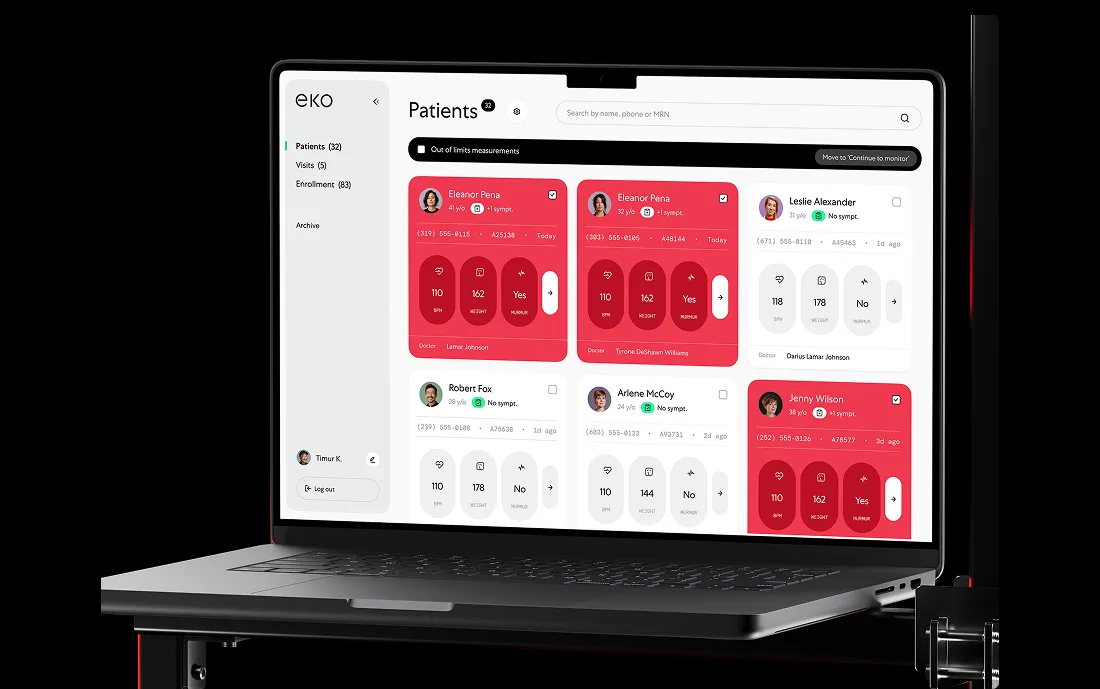
- 03Medical device softwarePairing, capture, signal quality, and retries, as shipped with Eko Health.
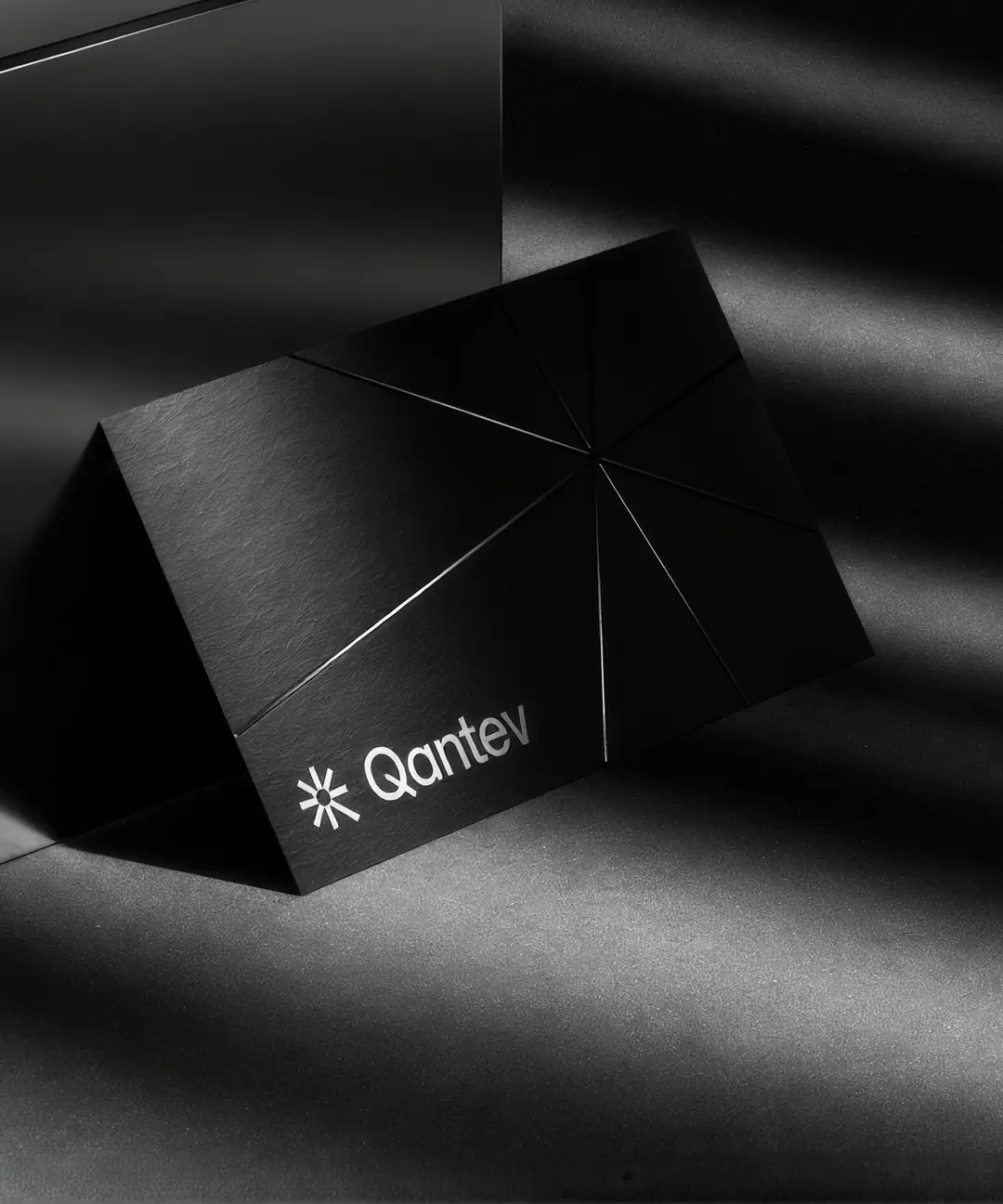
- 04Insurance and claimsIntake, review queues, model-assisted decisions, and audit trails, as shipped with Qantev.
- 05Telehealth and bookingProvider selection, scheduling, and the consultation itself — the step where our conversion study found the biggest drop-off.
- 06Health brandsIdentity, voice and web for companies that have to look credible to clinicians.
- 07Wellness and preventionHabit and tracking products, designed so people keep using them.
- 08Design systems for regulated UITokens, components, and accessibility checks that keep a growing clinical product consistent.
Three constraints in every healthcare product
They shape every healthtech engagement we run.
Nobody has spare attention
The clinician is interrupted. The patient is anxious. The reviewer has a queue. We assume every user is doing something else at the same time, so one view holds everything one decision needs.
The exception is the norm
Missing data, conflicting records, inconclusive results, an insurer’s edge case. When the exception path is not designed, staff keep a spreadsheet beside your product. We design the exception paths first.
Consent and data handling go in the flow
Consent, data handling, what the AI does and does not do, who is accountable. Hospital buyers ask about all four. Answering them inside the product, in plain language, shortens the sales cycle.
Healthtech work and research
4 of our 18 published cases are healthtech, alongside 2 published research reports.
How a healthtech engagement runs
Five steps. The states come before the screens.
Clinical context
Who uses it, in what setting, under what time pressure, with which systems already open.
States and exceptions
The full state matrix, written down before any layout: inconclusive, missing, urgent.
Flows and interface
Clinician and patient views designed together, with the exception paths designed first.
System and accessibility
Components, tokens, contrast, focus order, and screen-reader labeling, documented and handed over.
Measure in the wild
Where users hesitate, where support gets called, what the next round should fix.
 Spren (Elite HRV)
“UX design isn’t easy to get right but with them, we can move fast without compromising quality.”
Sophie Lezama · Innovation Director
Read the full review
Join hundreds of teams. And counting.






































See what this would look like on your product.
Send the product and the deadline. You get a reply within 24 hours with the closest cases, a timeline and an estimate.
Questions?
What kinds of healthtech products has Humbleteam designed?
Four published cases: Eko Health (digital stethoscopes and assessment software), Qantev (an AI platform for health insurance operations), HomeMedix (a care service brand), and Bow (a healthtech brand bridging botanical research and technology). We have also audited 30+ healthcare platforms and studied conversion across 30+ healthtech platforms. Both studies are published on this site.
Do you work with regulated or FDA-cleared products?
Yes. We worked on Pearl Dental AI, FDA-cleared diagnostics used by 29,000+ US dentists, and the Eko Health case is medical device software. We are designers rather than a regulatory consultancy: your quality function owns the standard, and we make the interface meet it without becoming unusable.
Can you design for clinicians and patients at once?
Yes, and it is usually the right scope. The two views share one data model but differ in density and language. Designing them in one engagement keeps a patient and a clinician from reading two different framings of the same result.
How do you handle AI features in a health product?
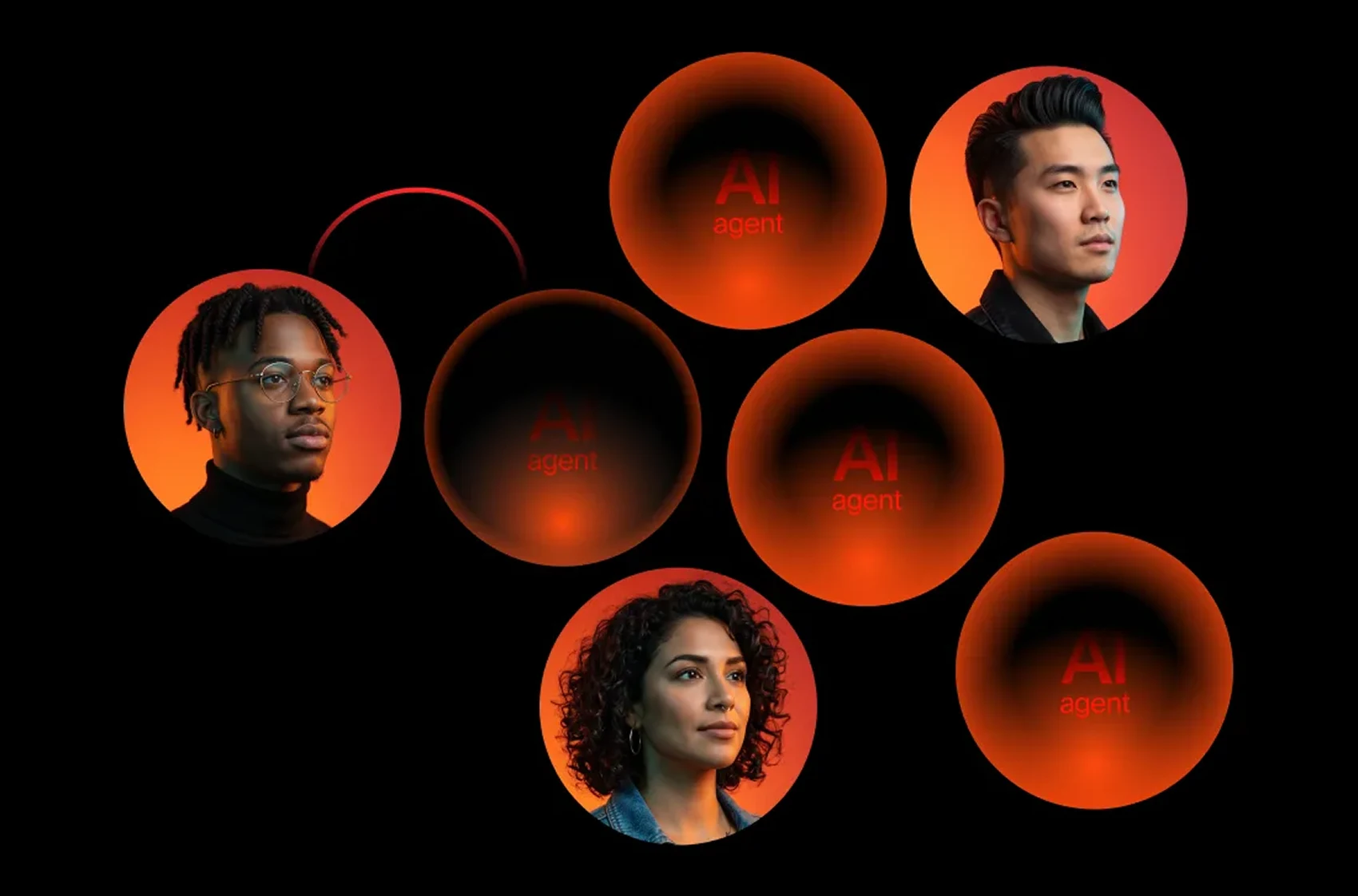
Every AI suggestion ships with its evidence and an override. The suggestion shows what it was based on, and disagreeing takes one click and records that a human decided. The AI flow design for healthtech page covers the patterns in detail.
Is accessibility included?
Yes, in every engagement. Older patients, impaired vision, gloves, clinical lighting, and one-handed use are normal conditions in healthcare. Type scale, contrast, target size, focus order, and screen-reader labeling are part of the system we hand over.
How quickly can you start, and how long does it take?
A first scoped piece of work can start within days of a call. A focused flow such as onboarding, results, or a review queue usually takes weeks; a full product with a design system takes months. You get a timeline and an estimate within 24 hours of sending us the product.
Last updated